Snazio - Wireless Security Gateway
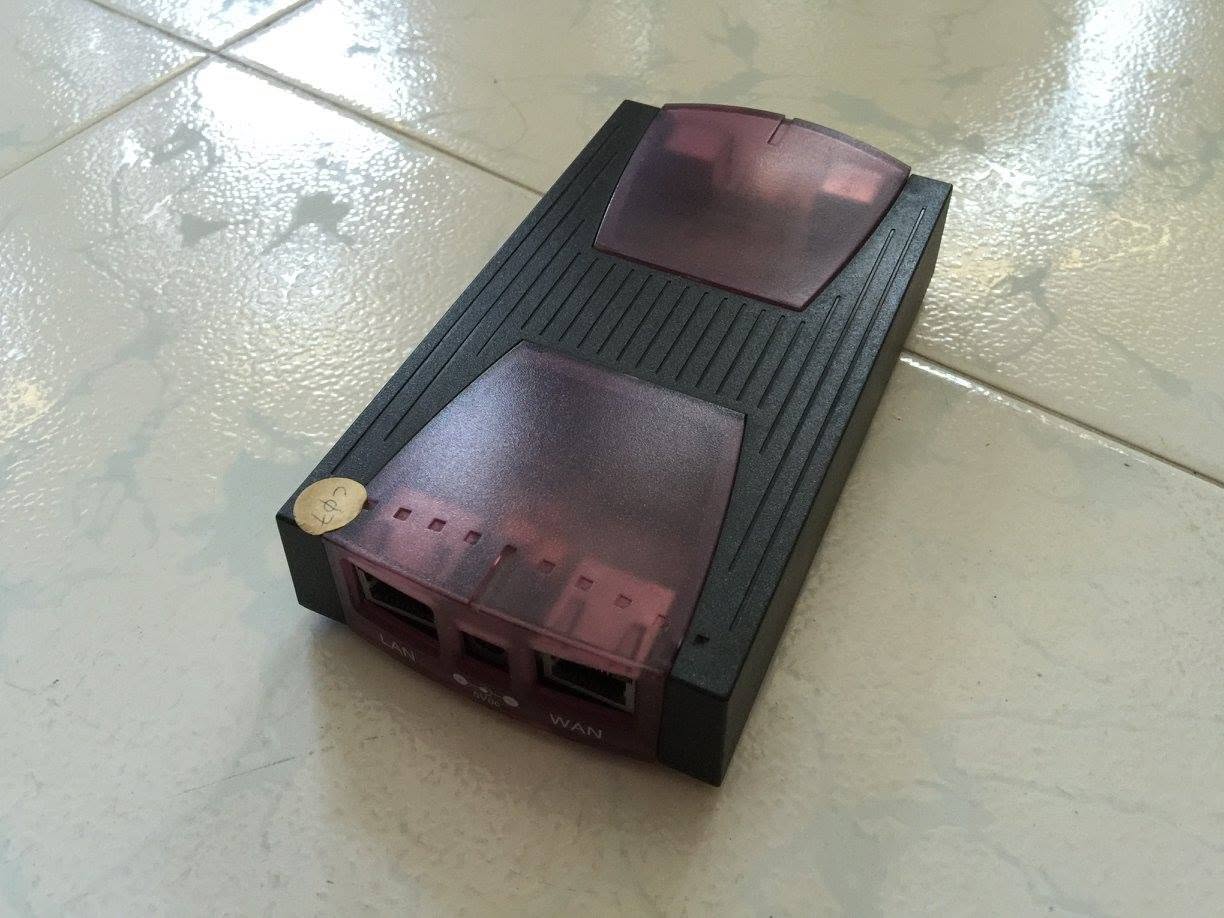
Product Overview & Background
The Snazio Internet Security Gateway (often marketed under V-One Multimedia’s "Snazio" networking line as a Secured Wireless / Internet Gateway appliance) was an early-2000s commercial networking security solution. It was built upon the patented Wireless Security Gateway technology originally invented and engineered by the Mobiwave team (under international patent WO2003045034A1, filed with a 2001 priority date) and OEM-licensed to V-One Multimedia Pte Ltd.
During the early 2000s, the mass adoption of IEEE 802.11b wireless LANs introduced severe enterprise security vulnerabilities. The original standard encryption, WEP (Wired Equivalent Privacy), was fundamentally flawed and easily cracked, while enterprise RADIUS/802.1x authentication architectures were far too complex and expensive for small-to-medium enterprises (SMEs), branch offices, and distributed academic environments. The Snazio Internet Security Gateway bridged this critical gap by delivering enterprise-grade hardware-enforced access control, packet filtering, and secure tunneling in a plug-and-play appliance.
Core Architecture & The Underlying Patent (WO2003045034A1)
The technical backbone of the appliance was based on the methods disclosed in patent WO2003045034A1 ("A Secure Wireless Gateway and Method for Providing Secure Communications"). The primary innovation resolved the insecure nature of wireless broadcast media without requiring proprietary client-side radio modifications.
1. Zero-Trust Link Isolation (Layer 2 / Layer 3 Decoupling)
- Default Untrusted Posture: By default, wireless clients associating with the access point were completely isolated from the internal wired local area network (LAN) and the public Internet.
- Controlled Redirection: Unauthenticated frames were captured at the network layer and redirected to an isolated captive portal/authentication engine running on the gateway itself.
2. Dynamic Policy Provisioning & Firewalling
- Per-User Firewall Rules: Upon successful authentication via credentials or token verification, the gateway dynamically provisioned stateful packet filtering rules, NAT bindings, and bandwidth queues specifically tied to the client’s IP/MAC session.
- Session Lifecycle Governance: Monitored session heartbeats, packet activity, and physical link drops, instantly tearing down dynamic firewall holes the moment a device disconnected or idled out.
3. Embedded Hardware Architecture
- Low-Power RISC/ARM System: Built around cost-effective, dedicated embedded network processors running a hardened, stripped-down real-time/embedded Linux OS.
- Multi-Interface Routing: Integrated dual or triple Ethernet interfaces (WAN, LAN, and dedicated Wireless AP/DMZ) allowing strict zone-based security segmentation between untrusted air interfaces and mission-critical wired infrastructure.
Key Features & Capabilities
- Integrated Captive Portal & Web-Based Authentication: Eradicated the need for complex, proprietary client software or 802.1x supplicants. Users authenticated via standard SSL/TLS-encrypted web browsers.
- VPN Passthrough & Termination: Supported hardware-accelerated IPSec and PPTP VPN passthrough/tunnels, enabling mobile users and branch workers to securely bridge back to headquarter intranets across untrusted public connections.
- Stateful Packet Inspection (SPI) Firewall: Defended the local perimeter against Denial-of-Service (DoS) attacks, port scans, and spoofing attempts originating from both the public WAN and rogue wireless clients.
- Bandwidth Management & Quality of Service (QoS): Allowed network administrators to rate-limit guest wireless bandwidth to prevent network saturation and guarantee capacity for critical business applications.
- Centralized Administration: Controlled via an intuitive, browser-based administrative interface providing live session monitoring, DHCP leases, security audit logs, and diagnostic tracing.
Commercial Deployment & Strategic Value
1. The V-One Multimedia OEM Partnership
V-One Multimedia (widely known in the 2000s for its consumer and commercial digital media products, PC peripherals, and network media players) partnered with Mobiwave to OEM the hardware and software platform. Branded under V-One's Snazio label, it targeted:
- Small and Medium Enterprises (SMEs) looking for out-of-the-box Wi-Fi security without enterprise IT overhead.
- Distributed branch offices, educational clusters, and public broadband hotspots.
2. Commercial Significance
- Early Adoption of Captive Security: Predated the ubiquitous modern captive portals found in enterprise Wi-Fi today (e.g., Cisco Meraki, Aruba, Fortinet), providing a commercial blueprint for dynamic access control over untrusted wireless media.
- Monetization of Deep-Tech IP: Demonstrated the commercial viability of Singapore-originated R&D (spinning out from KRDL/Mobiwave IP) into an OEM-licensed, consumer- and commercial-grade physical product distributed regionally.