Mobiwave BPA-D10
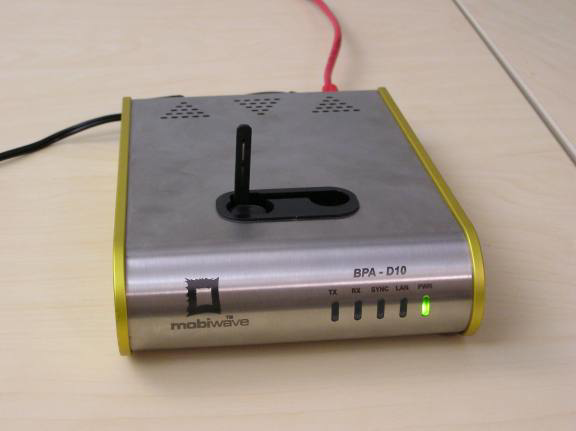
Product Overview & Background
The Mobiwave D10 Bluetooth Protocol Analyzer was a specialized hardware and software test and measurement instrument introduced in the early 2000s during the foundational commercialization phase of the Bluetooth standard (Bluetooth 1.0b and 1.1 specifications). Developed by Mobiwave Pte Ltd—a spin-off venture from Singapore’s Kent Ridge Digital Labs (KRDL)—the D10 was engineered to provide protocol-level packet capture, decoding, and verification for engineers designing Bluetooth-enabled silicon, baseband controllers, host stack software, and consumer accessories.
During this era, Bluetooth interoperability was a substantial engineering barrier across vendors due to ambiguous protocol interpretations and varied radio baseband implementations. The Mobiwave D10 served as an essential development bridge between raw RF behavior and upper-layer application communication.
Technical Architecture & Specifications
1. Hardware Architecture & Interfacing
- Air-Interface Sniffing & Direct Interfacing: Designed to capture over-the-air baseband packets as well as direct wired taps into the standard Host Controller Interface (HCI) over serial (UART/RS-232) and USB.
- Synchronization & Timing Accuracy: Implemented microsecond-level hardware timestamping to track packet timing tolerances, slot synchronization (625 µs slot timing), inter-packet guard times, frequency hopping sequences, and channel access codes.
- Host PC Connectivity: Connected to engineering workstations via high-speed serial/USB interfaces, offloading real-time trace buffers into host memory.
2. Protocol Stack Decoding
The D10 decoded the complete early Bluetooth protocol hierarchy:
- Lower Layers: Link Manager Protocol (LMP), Baseband packet headers, payload verification, and error-checking (CRC/HEC) status.
- Transport & Control: Host Controller Interface (HCI) command, event, and data packets.
- Core Data & Signaling: Logical Link Control and Adaptation Protocol (L2CAP), Service Discovery Protocol (SDP), and RFCOMM (serial cable emulation).
- High-Level Profiles: Early Telephony Control Protocol (TCS-Binary), Point-to-Point Protocol (PPP), and fundamental legacy profiles such as Headset Profile (HSP), Dial-Up Networking (DUN), and Generic Object Exchange (OBEX/FTP/OPP).
The D10 provided a comprehensive view of the protocol landscape, bridging the gap between raw radio bursts and application-level data.
| Category | Supported Protocols | The "So What?" Factor |
|---|---|---|
| Core Layers | Baseband, LMP, L2CAP | Essential for verifying the fundamental timing and logic of the Bluetooth 1.1 frequency-hopping kernel. |
| Service & Connection | SDP, TCS, RFCOMM | Facilitated the "convergence of telecommunications and consumer electronics" by debugging service discovery and serial emulation. |
| Legacy & Network | AT, HDLC, PPP, OBEX | Supported the legacy integration of mobile peripherals and object exchange protocols. |
| Advanced Networking | BNEP, HCRP, HID | BNEP enabled IP-over-Bluetooth testing; HCRP allowed for the first generation of wireless printing verification, replacing cable-heavy legacy setups. |
3. Software & API Extensibility (C++ COM Interface)
A primary differentiator of the Mobiwave D10 was its software architecture:
- Component Object Model (COM) Engine: Engineered with high-performance C++ COM interfaces on Windows environments.
- Programmable Automation APIs: Allowed test engineers to bypass standard graphical interfaces and programmatically capture, parse, and filter trace events directly inside automated testing frameworks, batch regressions, and custom production line suites.
- Visual Protocol Analysis: Included dedicated desktop software displaying ladder/sequence diagrams, drill-down tree-views of raw octets mapped to spec-defined fields, and time-correlated trace viewers.
Commercial Partnerships & OEM Distribution
Due to the specialized nature and cost barrier of enterprise-grade RF/protocol test equipment, Mobiwave established strategic original equipment manufacturer (OEM) distribution channels with established international test and measurement conglomerates:
- Yokogawa Electric Corporation (Japan): Partnered to bundle and distribute the D10 under the Yokogawa brand, targeting East Asian consumer electronics manufacturers and silicon houses in Japan and Taiwan.
- Martron (Martron Instruments Ltd., Europe/UK): Handled distribution and local enterprise support for European research laboratories, automotive electronics developers, and mobile handset makers.
Strategic Significance & Legacy
- Pioneering Bluetooth 1.1 Verification: The D10 was brought to market at a time when the market was transitioning from early pre-spec silicon to certified Bluetooth 1.1 compliant chipsets, where independent protocol verification was required for qualification (BQP/BQTF testing).
- Deep-Tech Commercialization: It represented a successful translation of Singapore's applied government R&D (KRDL) into a globally commercialized, patent-backed telecommunications test tool.
- Engineering Precursor: The modular C++ architecture and real-time capture paradigms built for the D10 established engineering foundations for subsequent embedded communication products, mobile learning suites, and secure network gateways developed by the same engineering teams.